Tag

child development

Browsing

Key Takeaways

  • The Montessori method encourages children to take ownership of their own learning journey.
  • Mixed-age classrooms foster a unique peer-teaching environment that builds social maturity.
  • Practical life skills taught in these centres lead to greater independence at home and school.

Introduction

When you first walk into a childcare centre in Singapore that follows a Montessori philosophy, you might be struck by how quiet it is. It isn’t the eerie silence of children being told to be still, but rather the focused hum of young minds at work. You see children as young as three carefully carrying trays, slicing bananas, or arranging coloured beads with intense concentration. It’s quite different from the high-energy, often chaotic atmosphere of a traditional playroom. This intentionality is the hallmark of Montessori childcare learning. It’s an approach that doesn’t just look at the child as they are today, but as the adult they will one day become.

The Power of Self-Directed Learning

In many educational settings, the teacher is the “sage on the stage,” directing every move the children make. However, in a Montessori-based centre, the child is the protagonist. They are given the freedom to choose their work from a range of developmentally appropriate options. This might sound like a recipe for mayhem, but it is actually deeply disciplined. Because the children choose what they do, they are naturally more invested in the task. If a child wants to spend an hour learning how to button a shirt or count to a thousand using golden beads, they are allowed that time.

This freedom builds a sense of agency that is rare in traditional schooling. Imagine being four years old and being trusted to manage your own time! It instils a profound sense of self-worth. They learn that their interests matter and that they have the capability to see a task through to the end. You know that spark of pride when a child shouts, “I did it myself!”? Montessori education seeks to keep that spark alive every single day. By removing the constant “no” and “don’t touch” of typical environments, we allow their curiosity to lead the way.

Developing Practical Life Skills

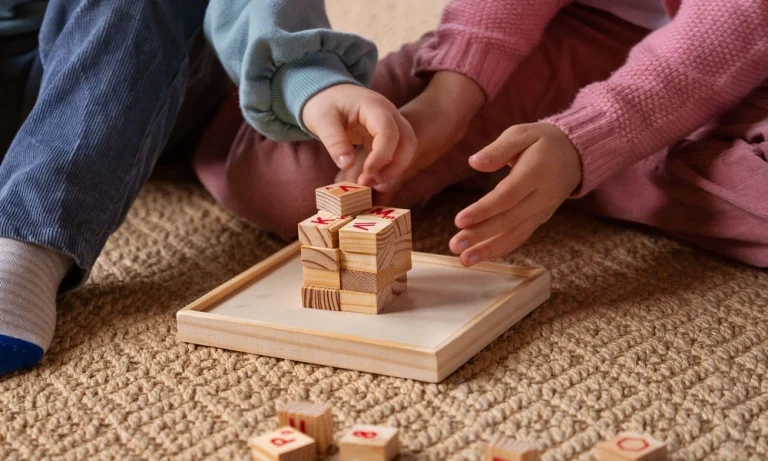
One of the most unique aspects of this method is the emphasis on “Practical Life” exercises. These are everyday tasks like pouring water, sweeping the floor, or polishing a mirror. To an adult, these are chores; to a child, they are fascinating opportunities to master their environment. A childcare centre that integrates these activities is helping children develop incredible fine motor control and hand-eye coordination. But more than that, it teaches them that they are a contributing member of their community.

These skills translate directly to life at home. A Montessori-trained child is often the one who wants to help set the table or put away their own laundry. It fosters a sense of responsibility and independence that serves them well into their teenage years and beyond. They don’t wait for someone else to fix a problem; they look for a way to do it themselves. Honestly, seeing a preschooler handle a real glass pitcher with care and precision is a great reminder of how much children can achieve when we stop underestimating them. It is about building a “can-do” attitude from the very beginning.

The Social Benefit of Mixed-Age Groups

In a typical Montessori childcare setting, you won’t find children grouped strictly by their birth year. Instead, you’ll see “vertical grouping,” where children of different ages work together. This mimics real life much better than age-segregated classrooms. The older children naturally step into leadership roles, helping the younger ones with a difficult puzzle or showing them how to wash their hands. This “peer teaching” is incredibly effective. A three-year-old is often much more interested in what a five-year-old is doing than what an adult is saying!

For the older children, this reinforces their own knowledge and builds empathy. They learn to be patient and helpful, qualities that are essential for healthy social development. For the younger ones, it provides a constant source of inspiration and a roadmap for what they will eventually achieve. This dynamic creates a tight-knit community where competition is replaced by collaboration. It reduces the “compare and despair” culture that can sometimes creep into early education, as every child is on their own unique path anyway.

Fostering a Lifelong Love for Learning

The ultimate goal of this educational style isn’t to produce “mini-geniuses” who can pass exams. It is to protect the natural curiosity that every child is born with. By allowing kids to explore topics that genuinely interest them, the Montessori method ensures that learning never feels like a chore. Whether it is botany, mathematics, or language, the child approaches the subject with a sense of wonder. This intrinsic motivation is the key to long-term academic success. When a child loves to learn, they don’t need rewards or punishments to keep them going.

As they move into primary school and eventually adulthood, these children carry a toolkit of “how to learn” rather than just “what to learn.” They are researchers, thinkers, and explorers. In an ever-changing world, the ability to adapt and teach oneself new things is perhaps the most valuable skill a person can have. It is about nurturing the whole person-mind, heart, and hands. When you choose this path, you are giving your child the gift of a solid internal foundation that will support them no matter where life takes them.

Conclusion

The Montessori approach offers a refreshing alternative to the fast-paced, high-pressure environments we often see. It respects the child’s natural rhythm and provides them with the tools they need to grow into confident, independent individuals. By choosing a childcare centre that values this philosophy, you are investing in a future where your child is not just a student, but a lifelong learner. It is a beautiful way to start their journey through the world.

Wharton Preschool blends the best of Montessori principles with a caring childcare environment to give your child a truly holistic start. Get to know more about us to experience the Montessori difference for yourself.
Key Takeaways

  • Standardised curricula often move too quickly, leaving some children behind before they have mastered basic concepts.
  • The Montessori approach utilises concrete materials to make abstract concepts, such as mathematics and literacy, easier to grasp.
  • Individualised learning paths ensure that every child’s specific developmental needs are met, preventing future academic struggles.

Introduction

It is a common concern for parents to notice that their child might be struggling with certain skills while their peers seem to progress effortlessly. These early learning gaps often occur when a child is required to follow a rigid schedule that does not accommodate their individual pace of development. Enrolling your child in a Montessori kindergarten in Singapore can be an effective way to address and prevent these gaps. By allowing children to work with specialised materials until they achieve true mastery, this educational method ensures a solid foundation is built. This prevents the frustration and loss of confidence that often occur when a child feels left behind in a traditional classroom.

The Role of a Specialised Curriculum

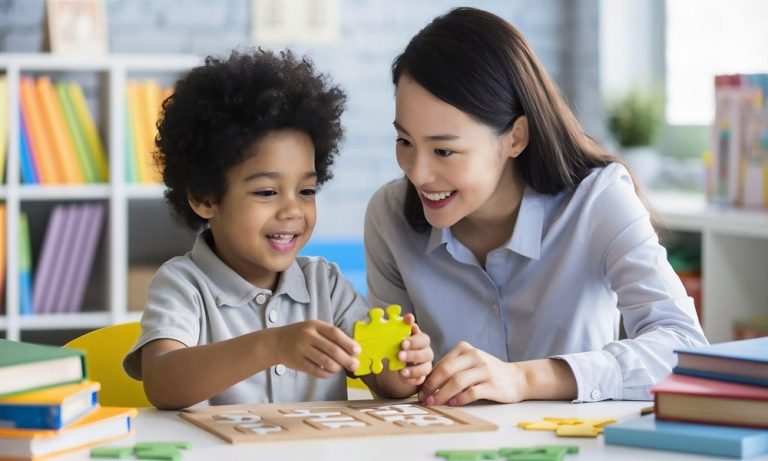
As children transition into more structured learning, the complexity of the subjects increases. A well-designed Nursery 2 curriculum in Singapore should focus on bridging the gap between simple play and more formal academic concepts. In a Montessori setting, this is achieved through “Practical Life” and “Sensorial” activities that prepare the hand and mind for writing and logic. For instance, tasks that involve pouring or using tweezers are not just for fun; they develop the fine motor skills and hand-eye coordination necessary for holding a pencil. By addressing these foundational skills early, the curriculum ensures children are physically and cognitively prepared for more advanced tasks.

Addressing Individual Learning Styles

Every child has a unique way of processing information; some are visual learners, while others are more tactile or auditory. Learning gaps often arise when the teaching method does not align with the child’s natural learning style. A Montessori environment is designed to cater to all these styles simultaneously. The classroom is filled with hands-on materials that allow children to see, touch, and manipulate concepts. This multi-sensory approach is particularly effective in a preschool in River Valley, Singapore, where diverse student bodies require adaptable teaching methods. When a child can learn in a way that makes sense to them, their engagement increases and the risk of developmental gaps decreases.

Fostering Confidence and Independence

A significant factor in academic success is the child’s belief in their own ability to learn. When children are constantly compared to their peers or corrected negatively, they may become hesitant to try new things. The Montessori philosophy encourages a “growth mindset” by focusing on the process rather than just the end result. Children are encouraged to correct their own errors using the built-in “control of error” in the materials. This builds self-reliance and the resilience needed to tackle difficult problems. A confident child is much more likely to overcome challenges and close any potential learning gaps on their own.

Consistency and Quality in Local Education

The quality of the preschool environment plays a vital role in a child’s long-term academic trajectory. Parents seeking a preschool in River Valley, often look for institutions that offer a blend of a strong curriculum and a nurturing atmosphere. Consistency in the teaching staff and a low student-to-teacher ratio allow for the close observation necessary to identify and support a child who might be struggling. Early intervention is the most effective way to stop learning gaps from widening, and a dedicated team of educators can provide the personalised attention required to keep every student on track.

Conclusion

Preventing early learning gaps is about providing the right environment at the right time. A Montessori kindergarten in Singapore offers the structure and flexibility needed to ensure that no child falls through the cracks. By focusing on a comprehensive Nursery 2 curriculum in Singapore, educators can help children build the cognitive and emotional tools they need for primary school and beyond. Whether you are looking for a preschool in River Valley, Singapore, or elsewhere, prioritising a child-centric approach is the best way to ensure your child’s educational journey is a successful one.

Schedule a visit at Brighton Montessori to schedule a visit and see our curriculum in action.

Key Takeaways

  • Structured physical activity builds the cognitive, emotional, and physical foundations necessary for primary school readiness.
  • There is a link between vestibular stimulation (movement) and the development of spatial awareness and reading skills.
  • A safe, fun environment encourages children to embrace failure as a stepping stone to mastery.
  • The group dynamics of early movement classes foster empathy, patience, and cooperative play.

Introduction

The journey of early childhood is a whirlwind of rapid milestones, from the first wobbly steps to the complex chatter of a four-year-old. During these formative years, parents look for activities that seek environments that nurture the whole child. While swimming or football are popular choices, gymnastics classes for kids offer a unique, multi-dimensional approach to development that few other sports can replicate. By engaging the body in three-dimensional movement, children are both building muscles and wiring their brains for success.

The Cognitive Engine of Preschool Gymnastics

The vestibular system, located in the inner ear, is responsible for our sense of balance and spatial orientation. Children with highly developed vestibular systems show greater proficiency in visual tracking and spatial reasoning. By navigating the physical challenges of the gym, a child is essentially learning how to learn, building a mental map of their capabilities in relation to the world around them.

At an age where sedentary lifestyle habits can begin to take root, structured physical play provides the foundational strength and flexibility required for a healthy life. Engaging in these activities helps to develop the body’s ability to sense its location and movements. A child who understands where their body is in space is less likely to be clumsy and more likely to feel confident in other physical pursuits.

Risk vs Hazard

Traditional wisdom suggests we should shield our children from any form of physical risk. However, by eliminating risk, we are inadvertently creating hazards. Risk is a calculated challenge. A hazard is something the child cannot see or control. Preschool gymnastics provides a controlled environment for risky play, which is essential for developing a child’s ability to assess their own limits.

Challenging the wisdom of constant protection actually fosters greater safety in the long run. Children who are taught how to fall safely, how to grip firmly, and how to land with soft knees are far better equipped for the wild playground of the real world. By letting children experience height and speed within the safety of a matted gym under professional supervision, we are teaching them the mechanics of their own bodies.

The Social Laboratory of the Gymnasium

Gymnastics classes for kids function as a vital social laboratory. For many preschoolers, this is one of their first experiences in a structured group setting outside of the home. The gym teaches children to be part of a community. These shared experiences build a sense of belonging and help to mitigate the social anxiety that can sometimes accompany the transition to primary school.

Furthermore, the relationship between a child and their coach is a unique dynamic that fosters respect for authority outside the parental sphere. A coach provides a different type of encouragement. This helps children understand that praise is something earned through persistence. The clear, objective goals of gymnastics provide a refreshing dose of reality.

The Long-term Arc

The transition from a toddler’s clumsy roll to a school-aged child’s controlled handstand is a visual representation of a maturing nervous system. Gymnastics classes for kids facilitate this transition by breaking down complex movements into manageable, bite-sized pieces. As they progress, the tasks become more demanding, but because the foundation is solid, the child remains undaunted.

Ultimately, the gymnasium is a place and space where children are encouraged to be loud, to be fast, and to be brave, but within a framework of discipline and safety. This balance is exactly what the developing child needs to find their footing in a complex world. By investing in these early years of movement, you are providing a sanctuary for growth where your child can discover the limits of their world and the limitlessness of their potential.

Conclusion

The benefits of engaging your child in structured movement go far beyond the walls of the gym. From the neurological boost provided by preschool gymnastics to the social and emotional resilience forged in gymnastics classes for kids, the gymnasium serves as a foundational training ground for life. By challenging the traditional wisdom of over-protection and embracing calculated risk, we allow our children to develop the strength, coordination, and confidence they need to thrive. As they tumble, climb, and balance, they are building the internal architecture of a successful, resilient individual.

As a parent, do you want to know how movement can change your child’s perspective? Speak with BearyFun Gym and take the first step toward building a stronger, more confident future today.