
The dreaded groan of students facing math worksheets echoes through many school corridors. Traditional memorization methods often drain the natural excitement from numerical problem solving. However, progressive educators are actively transforming these stale routines into vibrant learning labs. Innovative schools now partner with specialized academic networks like Mission.io to revitalize their daily curriculum. By implementing dynamic experiments, teachers easily turn abstract equations into tangible physical realities. This shift fosters deep engagement and unlocks genuine curiosity within young minds. Now, students look forward to math class with great anticipation.
The Power of Active Exploration
Many children view mathematics as an isolated language of cold, rigid rules. But mathematical concepts actually describe the living rhythm of our physical universe. Teachers can bridge this gap by introducing tactile experiments that require movement. For instance, students can map their own running speeds across the school playground. Sometimes, a simple stop watch transforms a boring division lesson into a thrilling race. Mission.io helps design these active lessons to ensure high academic standards. Through movement, the core numbers gain immediate meaning and context. You will see bored faces quickly light up with sudden understanding.
Bringing Geometry into Three Dimensions
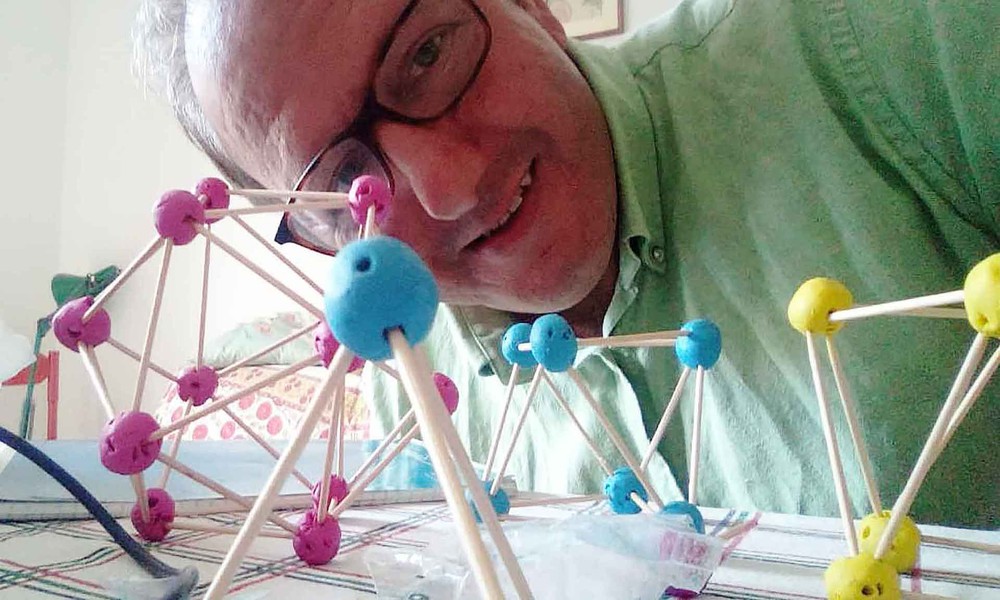
Flat textbooks often fail to show the true beauty of geometric shapes. Students struggle to visualize how flat drawings fold into complex solid structures. Now, imaginative educators use inexpensive building materials to solve this visual problem. Children construct massive skeletal towers using wooden toothpicks and soft marshmallows. This playful process naturally highlights the structural strength of triangles over squares. So, abstract geometric theorems suddenly become concrete engineering choices before their eyes. These hands-on lessons serve as excellent math STEM activities for teachers seeking deeper classroom engagement. The physical creation builds lasting mental pathways that formulas alone cannot duplicate.
Probability Found in Everyday Games
The confusing laws of probability frequently twist student brains into tight knots. Standard coin flips can become tedious after a few repetitive attempts. Instead, teachers introduce colorful carnival games to demonstrate statistical chance more effectively. Students track outcomes using large foam dice and custom spinner wheels. They quickly notice specific patterns emerging over many consecutive game rounds. Consequently, the complex math behind probability becomes an exciting quest for victory. Learning shifts from passive listening to active, joyful discovery.
Conclusion
The journey from classroom boredom to brilliant insight requires a shift in teaching philosophy. Math must be experienced through the hands and eyes, not just memorized through repetitive drills. Creative experiments remove the ancient fear of numbers and replace it with joyful exploration. When students build, measure, and play, complex theorems naturally become second nature. Ultimately, these lively methods prepare children for a bright, analytical future. Math comes alive when we open the door to imagination and discovery.

Comments are closed.