

Essential Points
- Montessori materials let children build understanding through hands-on work rather than memorisation
- Classrooms are structured around long, self-directed work periods
- Skills like independence and focus develop alongside academic content
- A slower, exploratory pace supports confidence and curiosity over time
- Mixed-age settings encourage social learning alongside individual work
A Better Way to Learn
Most of us remember classrooms where the teacher talked, and everyone else copied things down. It worked, sort of, but it rarely made anyone curious about the subject itself, and the curiosity often faded once the test was over. That’s the gap a preschool with a Montessori teaching approach tries to close. Rather than handing children facts to memorise, the method hands them tools to explore with, then steps back and lets them work things out for themselves, at their own pace. For parents weighing up early education options, a Montessori preschool in Singapore offers a different starting point: one where discovery, not repetition, sets the pace for how a child learns and what they carry forward.
What Rote Learning Leaves Out
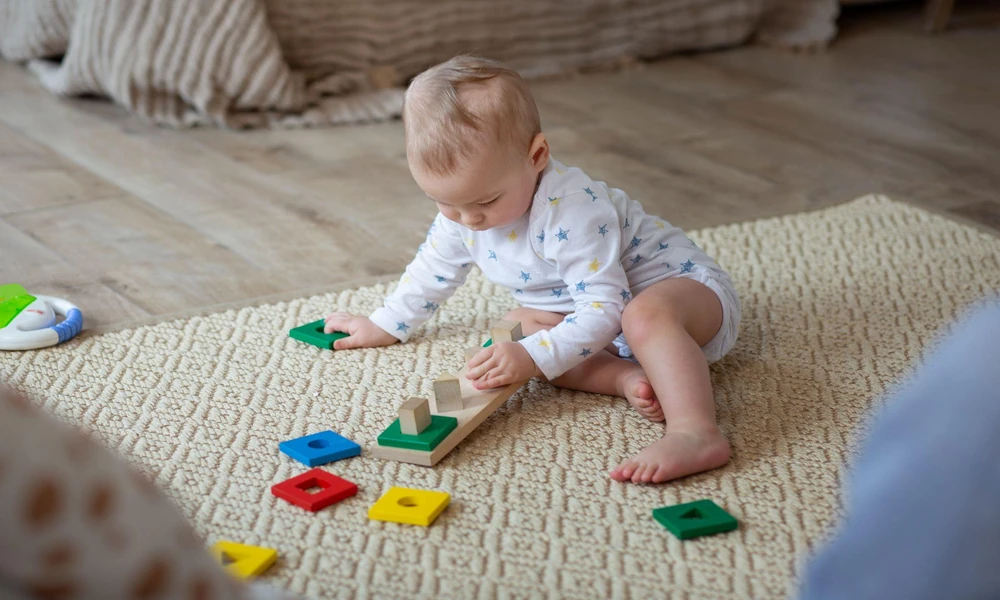
Rote learning has its place, but it tends to reward the wrong thing: recall over understanding. A child can chant the alphabet without grasping how letters build words, or count to twenty without knowing what quantity actually means in practice. A preschool with a Montessori teaching approach flips that order round. Children handle real materials, sandpaper letters, bead chains, geography puzzles, before they’re expected to abstract the ideas behind them. Understanding tends to arrive on its own once a child has physically worked through a concept, rather than being told the answer and asked to remember it for a test later on.
How a Montessori Classroom Actually Runs
A Montessori room doesn’t look like rows of desks facing a whiteboard. Children move between activities on their own timetable, guided by what tends to happen across a typical morning:
- Arrival and free choice of work from prepared shelves
- Uninterrupted work periods, often lasting up to three hours
- Small group lessons introduced by the teacher as needed
- Outdoor or sensory activities between focused tasks
- A shared closing circle to reflect on the morning
This is common practice at a Montessori preschool in Singapore, where the daily rhythm is built around sustained attention rather than a bell moving children from one subject to the next.
Skills That Extend Past the Classroom
The habits children pick up in a Montessori setting aren’t limited to academic subjects, though those matter too. A few tend to show up consistently across different children, different classrooms and, often, different countries:
| Skill | How it develops |
| Independence | Choosing and completing their own tasks |
| Focus | Long, uninterrupted work periods |
| Problem-solving | Self-correcting materials with built-in feedback |
| Social awareness | Mixed-age classrooms and shared spaces |
A preschool with a Montessori teaching approach treats these as outcomes worth as much attention as reading or counting, since they carry over into how a child handles new situations well beyond the classroom, and often into how they approach schoolwork later on.
Why Curiosity Matters More Than Speed
Parents sometimes worry that a slower, exploratory pace means children fall behind on the basics. In practice, the opposite tends to hold up over time, at least anecdotally. A child who’s used to asking questions and testing ideas often approaches new subjects with more confidence than one who’s only practised repeating answers back. A Montessori preschool in Singapore isn’t racing towards a syllabus; it’s building the disposition to keep learning once the syllabus is long finished. That disposition, staying curious rather than simply compliant, is harder to teach directly and easier to grow through daily practice, especially in the early years when habits of mind are still forming.
Building Skills for the Future
None of this means traditional methods have nothing to offer, but there’s a reasonable case for starting early education with exploration rather than memorisation, well before formal schooling takes over. Children who are given room to investigate tend to hold onto what they learn for longer, and they carry the habit of asking “why” well beyond their preschool years. That’s the quiet difference a Montessori classroom can make: it isn’t just teaching content; it’s shaping how a child approaches learning itself, one material and one question at a time.
Contact Wharton Preschool to arrange a visit and see how a Montessori classroom works day-to-day, and whether it fits what you want for your child’s early years.




Comments are closed.